
The history of the Russian cinema may be divided into three periods: the Russian Empire period, the Soviet Union period and the period after Perestroika and the fall of The Soviet Union. The cinematography was first brought to the Russian Empire by the Lumiere brothers themselves in the very same year it was invented. Also in 1896…
film history

Film History: The First Film Ever Made
It was a cold December night three days after Christmas in 1895 when guests filed curiously into the dimly lit basement at the Grand Café on the Boulevard des Capucines in Paris. It was the age of marvels, of new inventions, and what the people had come that night to see was a magic show…

The Cinematography of Vietnam: Documenting the Wars
The history of Vietnamese cinematography dates back to the 1920s when a group of intellectualists from Hanoi formed the Huong Ky Film Company producing mainly documentary movies. The history of Vietnamese cinematography dates back to the 1920s when a group of intellectualists from Hanoi formed the Huong Ky Film Company producing mainly documentary movies. The first…

The Brazilian Cinema: Much More Than Just Soap Operas
Brazil takes a special place in the cinematic landscape of South America. The roots of Latin American cinema itself came from Brazil. In spite of many storms and spells of stagnation, it is also the most significant cinematographic power on the continent. In 1886 in Rio de Janeiro the first films were made and shown…

The Austrian Cinematography: Great Cinema of Small Country
Austrian cinematography evolved in parallel to the other European cinematographies since the Lumiere brothers presented to the world their incredible invention – the cinematography. The first recorded Austrian film company, which went down in history as Wiener Kunstfilm, commenced production in 1910, and this point is often referred to as the starting point of Austrian cinema. Already two…
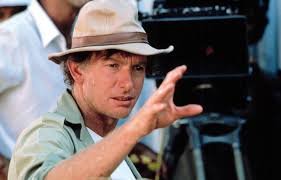
Peter Weir: The Mood Master.
The name of Peter Weir is known to almost every film fan. Who hasn’t raved about and been frightened to death watching his most famous film Picnic at Hanging Rock? With this film, already at the very beginning of his career, Weir ensured himself an honourable spot in the history of film and ensured the world paid attention…

Mike Leigh: Kind-Hearted Observer
Mike Leigh is the head representative of British social realism, within the film industry, and his filmography is a showcase of British cinema in the world. He is often mentioned in the same breath as Ken Loach, with whom he shares an interest in social matters. Leigh is called a “tragi-comedian of everyday life” and…

Krzysztof Kieslowski: Morally Concerned Filmmaker
Krzysztof Kieślowski was, and still is regarded as, one of the most renown Polish directors in the world. He was born on June 27th, 1941 and died, a sudden death, on March 13th, 1996. He was a heavy smoker. Do you think he could have been still with us if he had been introduced to electronic…
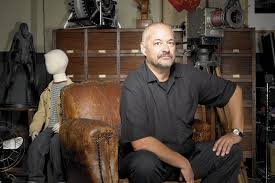
Jean Pierre Jeunet: Fairy Visionary
Jean Pierre Jeunet, one of the most renowned French directors these days. He never attended any film schools, and he learned his craft by making short films, commercials and video clips. He was born on the 3rd of September, 1953 in Roanne, France. He has been interested in cinema since childhood. His favourite (directors) were Marcel…

Jane Campion: Women’s Cinema at its Best
”Women’s cinema” is a pretty new invention. Elevated by feminist orientated critics and theorists to the distinction of a film style it became a buzzword, applied without restraint to analyse all movie products made by women. Jane Campion is considered to be one of the greatest film directors, male or female, of modern times, whose films are…