
The way we relate and “consume” stories has changed drastically in the past 20 years. The rise of the Internet, mobile phones, and social media has reshaped how stories are told. Luckily for storytellers (including filmmakers), interest in and need for stories have not diminished. The art of storytelling goes way back to prehistoric times…
Filmmaking and Writing
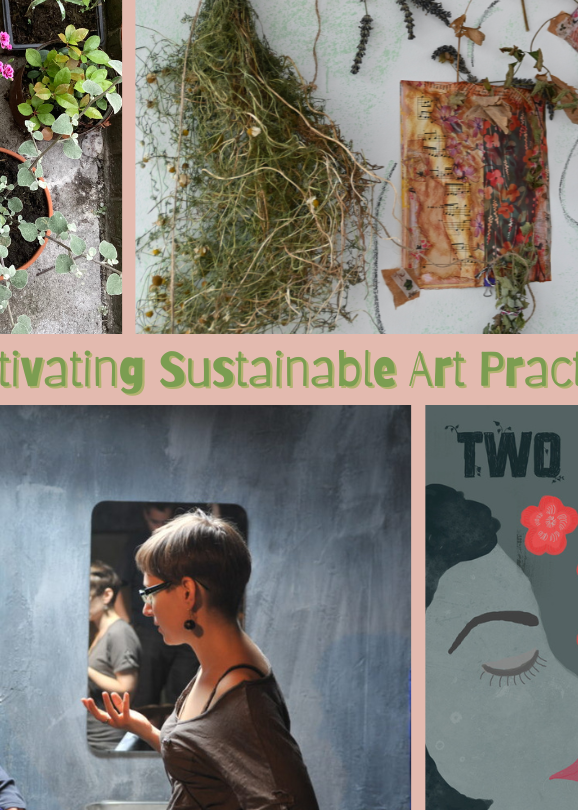
What Does Environmental Sustainability Mean, In the Context of Cultivating Sustainable Art Practice?
This approach not only helps me keep the costs of my projects down, but my choice to work with whatever I have access to has a smaller environmental impact. I don’t feel that having “lesser” choice of physical resources has a negative effect on my artwork; I feel it’s quite the opposite, as I’m presented…

Sustainability in Film & TV: Cutting Energy and Water Waste on Set
In this post, I focus on sustainable solutions for energy and water consumption on film and TV sets, as well as in studio settings. Producing any film or TV show requires significant resources; however, to reduce CO2 emissions and dependence on fossil fuels, the entertainment industry must change its use of resources. To significantly reduce…
Greener Productions: Rethinking Sustainability in Film & TV (Production Materials)
Currently, most of the production materials used for film and TV productions aren’t fully recycled or reused. Synthetic foam and adhesives, which can be easily shaped with manual tools but can’t be recycled or reused, are still very popular within production departments. Digital fabrication could be a sustainable solution to replace traditionally used materials. As any filmmaker…

Shooting Sustainably: Greener Practices in Filmmaking
“The average tentpole film generates 2,840t of CO2e (carbon dioxide equivalent), the equivalent of 11 trips to the Moon” Screen New Deal Report, 2020. Most of us love visual entertainment, and nothing is better than immersing ourselves in a good film that works on all our senses. I also love Mother Nature, and I’m fully…

Wardrobe with a Conscience: Long-Term Sustainability in Costume Design
Essential Facts 92 million tons of textiles are produced every year. Between 80-100 billion new clothing items are produced every year. 87% of materials and fibres used for clothing production will end up either in incinerators or landfills. On average, people own 60% more clothes than 15 years ago. theroundup.org Since graduating from film…

How to Begin?
Do you ever wonder how projects begin? Is it a slow process but consistent progress? Or perhaps the beginning and the rest of development happens in a flash as all the creative energy goes towards completing the project? In my creative practice, which has spanned over two decades, I have experienced an eclectic mixture of…

Without Development, There Is No Project
I would describe script development as this: long, intense, often lonely part of the creative process that takes place before everyone falls in love with your script and wants to jump on board to work with you. Without that however, nothing can be produced because there is nothing to produce. The idea spark lands on…

If You Are New to Filmmaking …
There is one unbreakable rule of filmmaking; if you want to be a filmmaker, you must make films. You can study books, films, and videos, but if you don’t put all that knowledge into practice, you will never know what works and what doesn’t in the filmmaking process. Luckily, we live in times with easy…

If You Are New to Screenwriting….
If you are just about to embark on a screenwriting adventure, it’s crucial to know the right screenplay structure. The script structure for film and TV is very different to theatre screenplay. If you send your finished manuscript in the wrong format to anyone in the film/TV industry, it will be instantly dismissed for looking…