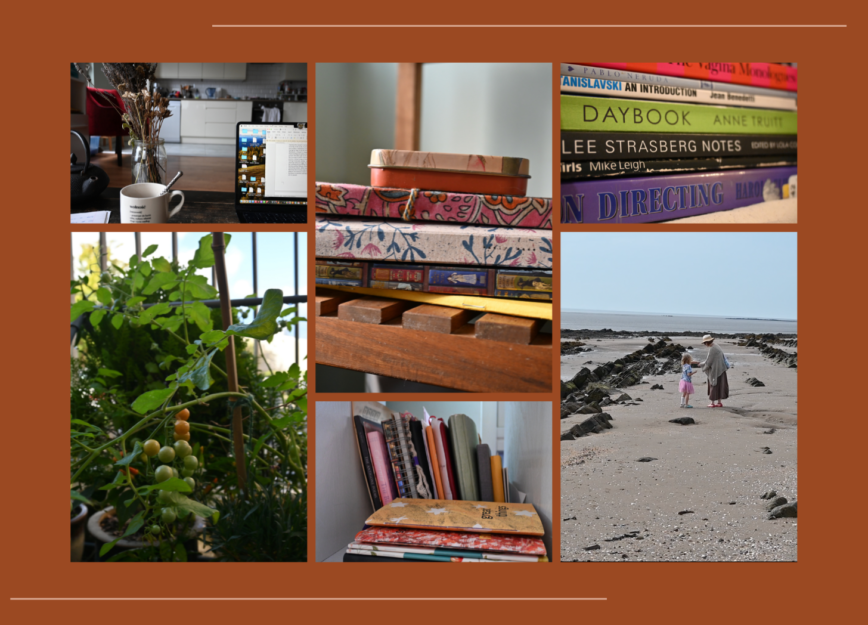
In the Slow Creativity for Beginners, post I wrote about connecting to creativity through slow authentic engagement with activities that make us happy but don’t necessarily produce tangible outcomes in a form of a project. This is one aspect of my creative practice. The other side of what I advocate for and write about is sustainable creativity in the context of running a creative practice not for a season but for a lifetime.
A lot has been written about sustaining creativity, re-engaging with creativity and how to be creative. But not that much focus has been devoted to making sure creativity and running a creative practice is sustainable for a lifetime. Toxic productivity and the fast and furious way creative content has been produced since the early 2010s is in stark contrast to what I’m trying to build for myself in my creative practice, while sharing my experience with others who have devoted their lives in service to creativity and their own creative practice.
Context
In 2012 I made a feature film Anna & Modern Day Slavery on a $12,500 budget. The budget for the film was crowdfunded on IndieGoGo and the whole cast and crew donated their time to the production for free. (I’m eternally grateful for that.)
However, once the production was over, I was left alone (one of my co-producers helped out with marketing efforts for at least a year, which was mega helpful but not having money to pay colleagues for their work is not sustainable and a practice I would want to encourage) to manage the social media, post-production and keep up with the community that was spread across many social media outlets. It was an impossible job for one person to keep on top of all the tasks. The pressure, the fragmentation of jobs and tasks as well as the time demand on all of my responsibilities triggered a creative burnout, which lasted until 2021.
In 2010, I had very few boundaries around social media and little awareness of their explosive nature. The constant pressure to produce and share left little space for reflection or creative growth. Instead of supporting my practice, social media became another demand on my time and energy.
Don’t get me wrong I’m proud of the film I made and take full responsibility for the consequences of trying to do too much, on zero £ production budget.
Luckily, I slowly managed to recover from my creative burn out, but that took years of learning how to be kinder to myself, my creativity and do less, much less.
What I Wish I Had Known about Sustaining Creativity Over a Long-time Before My Burnout?
- Engaging with creativity and nurturing creative practice it’s a marathon not a sprint.
- Don’t compare yourself to others as everyone has a different journey they are on. It’s not easy to feel great about yourself if everyone else is way ahead of you. But it’s doable and an important part of the process. Otherwise comparing yourself to others can be so distractive to creativity.
- Not aiming for perfection. I’m not saying that anyone should create half-cooked projects, but what I’m saying is that small imperfections shouldn’t cancel the project itself.
- Don’t spread yourself too thinly as that will minimise your focus. (For example, social media is excellent at taking away focus from us and our creativity).
- Be selective over projects you want to work on and people you want to work with.
- Not every idea needs to be implemented right away. Wait a bit before throwing all your resources and energy into a new project.
- Saying no and learning how to say no is part of the growth and will help you build up a sustainable creative practice in a long run.
- People will take advantage of you if you don’t set boundaries. (Be clear on tasks, responsibilities and deadlines.)
- Finances do matter. Creative people need to pay rent and eat. If you can support creative individuals, please do so. Being a creative and using creativity in your work should be treated like any other occupation for which financial compensation is in order or any other type of exchange, if that is agreed on beforehand.
What I Do Now to Make Sure My Creative Practice Is Sustainable?
- I use reflective practices before making decisions.
- I take time to decide.
- I have manageable “to do” list and would rather do less than more.
- I’m very protective of my time and often say no to projects.
- I don’t try to do everything at the same time.
- I know my energy and time limits and I use both to work on projects I want to work on.
- At this stage of my life, I don’t apply for any residencies or funding opportunities. The application process requires time and energy I want to devote to existing projects. Over the years I have also become increasingly sceptical about some of these systems. So for now building a sustainable creative practice is where my focus goes.
- I re-invent and change my working routines often according to seasons and my energy levels.
- When I don’t have time to write or make a video, I try not to stress about it too much. I simply communicate with my audience. At the end of the day, I’m only a human and life does happen to us all.
- I’m not on social media (I have very mixed feelings about the Notes on Substack as it reminds me too much of Twitter and all those lost hours, days and weeks of my life I’ll never get back.). I’m present on LinkedIn, YouTube, Substack and Patreon. But I don’t actively post on any of the “traditional” social media outlets.
- I make sure I can afford to work on a project, if I’m developing something bigger or new.
- I have boundaries when it comes to my work.
- I don’t try to please anyone. I’m nice the polite English way but when needed my Central Europeanness comes through and I’m not afraid to use it.
- I have financial buffer in form of savings and investments and a very healthy attitude towards spending as well as late capitalism.
- I keep my living costs really low to be able to run my creative practice without constantly having to think about money.
- I charge for my work and all those years of experience I bring into the table.
When I started running my creative practice in 2004, I never thought about long term sustainability as I was young and naïve enough to think that everything was going to work itself out.
But over the years I’ve learned that it takes a real afford to run a creative practice, to stay true to yourself and not drive yourself crazy in the world that is constantly under pressure.
Having slow approach to creativity and creative projects has helped me grow creative roots despite all the unknowns and challenges. And this is what I truly wish for you and your creativity, strong deep roots that can keep you grounded no matter what.
Join my Creative Community:
YouTube – for creative videos and my fiction films
Patreon – for behind the scenes updates, School Runs stories, Ecotopia University stories, Another Way Creative Program and weekly creative prompts.
Leave a Reply