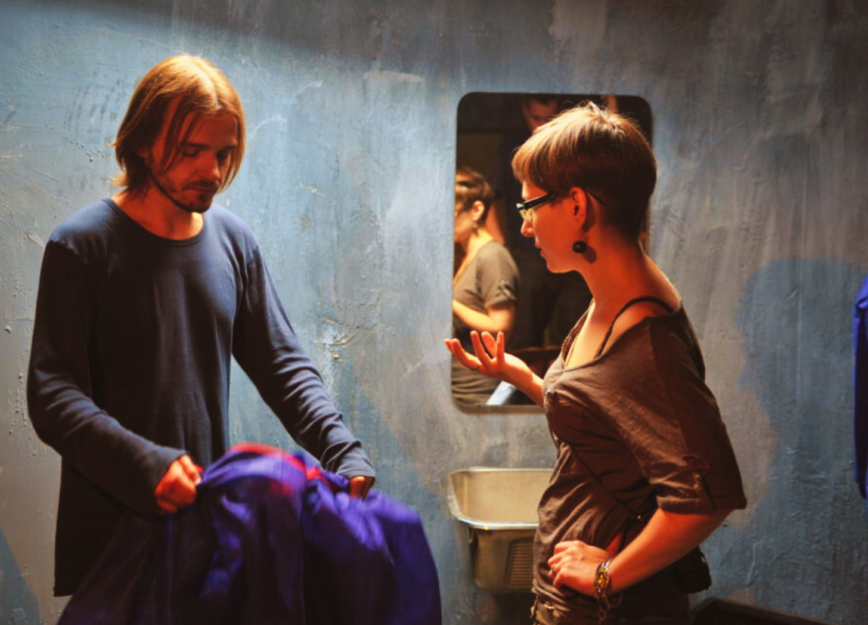
My first venture into directing was at the age of 8, when, together with the kids from my block, we put on a Christmas play. I was thrilled to produce the play and direct my “actors.” Unfortunately, during the premiere, one of us accidentally knocked down the Christmas tree. My mum didn’t scream at me, but I “got the very much disapproving look.”
It must have been one of my earliest memories when I associated creative fun with failure and silent disapproval. When I think about it now, it was a painful moment that only added to the already-growing list of my “not good enough traits.”
With each passing year, my learning difficulties became more evident to me. However, none of the adults in my life noticed that I wasn’t coping. After learning how to read, my biggest challenges were retaining information, spelling, and time management. To this day, I’m afraid I might forget everything I know when put unexpectedly on the spot or when I’m under pressure.
As you can imagine, I hated formal education and was often put down by teachers who called me lazy or stupid. One English teacher was certain I would never learn English. Well, I proved her wrong.
I know that my story is not uncommon. A lot of the neurodiverse learners can’t cope in the traditional school setting and receive zero support, especially if they mask well. Those kids can be talented, but the odds of falling behind one way or another and the shame attached to that can last a lifetime.
The lack of early support, interventions and accommodations left me in a lot of emotional turmoil and academically behind as I was always trying to catch up, even in the subjects in which I felt pretty confident, such as history or literature. I could easily forget facts or dates, especially under stress.
Despite my strong inclination towards creativity and the humanities, I wasn’t encouraged to be creative or learn more about art. Creativity and art as a career choice were abstract to everyone around me and not something people did. My godfather even tried to explain to me that in the event of any major crisis, society will need doctors and engineers, not artists.
Well, obviously, I disagree. Society needs balance, and the Covid pandemic has proven that.
During my formal education, creativity helped me develop accommodations that suited my neurodiverse needs.
Unfortunately, despite all the hard work, I still had significant learning gaps, as most of the information I gained wasn’t stored in my long-term memory. To this day, I struggle to retain information, which is a very common trait among dyslexic individuals. Writing scripts for public presentations is my security blanket and one of my most recent accommodations to public speaking (during meetings or presentations).
I was brought up in a system that didn’t allow asking questions, didn’t permit curiosity, and put massive pressure on me to know everything before I even had a chance to learn. My inner critic, who grew stronger during my formative years, is still ever-present in my life. The signals I received from home and school regarding my inability to learn the traditional way left lots of scars that are not easy to heal.
However, my creativity and imagination made me feel capable of taking on a world that wasn’t friendly, and finally connected me to my true self despite everyone and everything that said I couldn’t do it.
Don’t forget to grab my FREE Another Way Self-Paced Creative Development Workshop.
For more creativity & creative tips, check out Another Way Series on YouTube.
Leave a Reply