
To accomplish that, people have to reduce (their consumption), reuse (as many materials/ parts/components of products as possible), and recycle (making sure the recycled items indeed go into recycling facilities without contaminating other products. In short, no “wish cycling“; if the label on the bin says that something isn’t recycled, it means it isn’t. At…
environmental sustainability
The Circular Economy Model: Closing the Loop (Part 1)
Our world currently operates under a linear economic model, primarily based on the consumption of finite resources provided by the Earth. The resources are taken out of Earth and turned into products, which at the end of the cycle are disposed of (wasted) and never used again. Just think about all the products you have…
Biodegradable, Compostable, and Bioplastics: What’s the Difference?
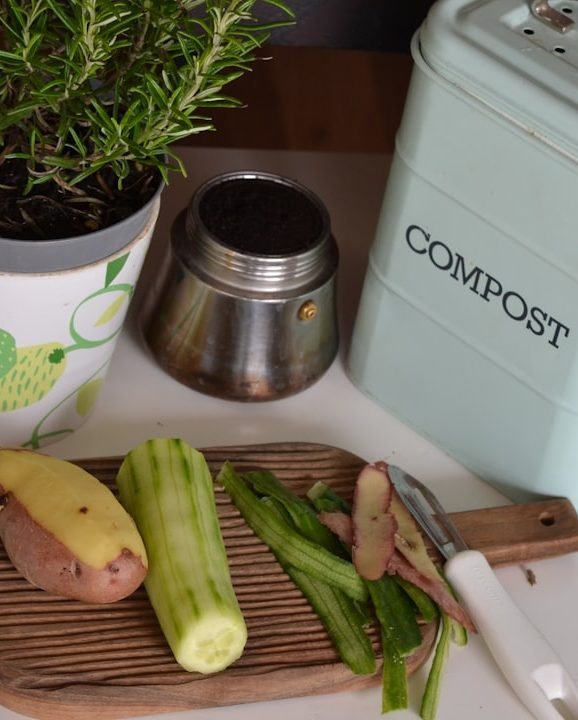
Biodegradable products are made from materials that will decompose with the help of microorganisms, such as bacteria or fungi, with or without oxygen. In short, it means an item will decompose without leaving any pollution. In reality, every product that we use will ultimately break down. However, the question is how long it will take…

What Does Sustainability Really Mean?
In 1983, former Norwegian Prime Minister Gro Harlem Brundtland was appointed by the United Nations to run the World Commission on Environment and Development. After four years of research and consultations, the commission published a report titled “Our Common Future,” which defined sustainable development as “development that meets the needs of the present without compromising…
Rethink Your Bathroom Footprint
Over our lifetime, each of us creates, on average, 512 kgs of bathroom waste. Some of those items, such as contact lenses, will never decompose. I’ve been trying to ditch plastic from my bathroom products for years. Unfortunately, it feels like Sisyphus’s job, since most of my products come in plastic. I honestly try to…