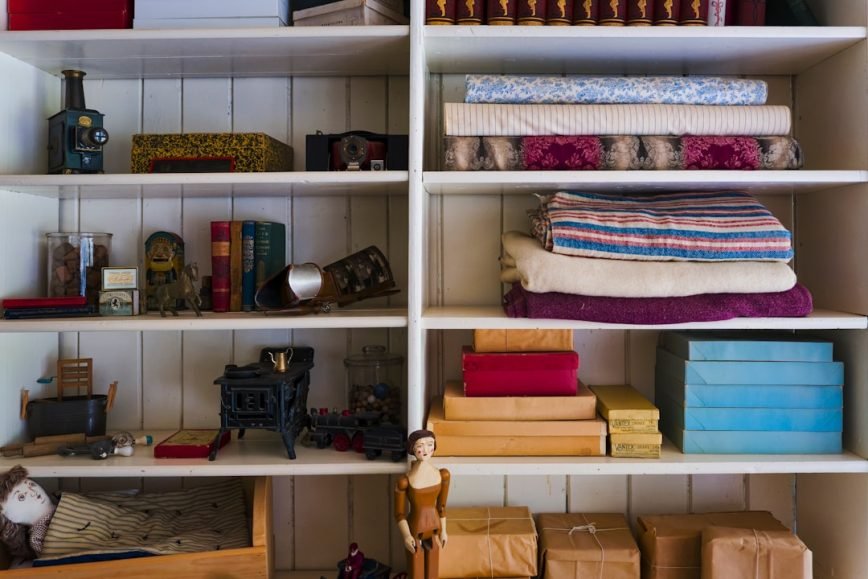
I still keep clothes from my crazy 20s because they remind me of the fun I had and the important milestones I went through. I’m attached to those items because I loved those experiences so much that the thought of letting them go is too painful.
Emotional attachment to things is real and can be powerful, especially when it replaces our connection with others or begins to control our decisions, affecting our daily lives.
I’m a firm believer in life’s moderation. There is nothing wrong with collecting a little bit of stuff that has emotional significance. However, emotional buying can only recreate temporary happiness and peace of mind. If purchasing gets out of hand, clutter creeps in, and in my experience, it can introduce brain fog, confusion, and an inability to think creatively.
I’m a firm believer in moderation in life. There is nothing wrong with collecting a little bit of stuff that has emotional significance. However, emotional buying can only recreate temporary happiness and peace of mind. If purchasing gets out of hand, clutter creeps in, introducing brain fog, confusion, and an inability to think creatively.
For example, for years, I had my son’s kindergarten art displayed in our living room. A few weeks ago, I decided to put it away because it was becoming too dusty—at least, that was my excuse. The moment I tidied up that part of the living room, it “magically” became brighter and somehow lighter. Now, when I look at that spot, I see clarity, while before, it was just unnecessarily busy, adding to my brain clutter.
As much as I wanted to hold on to my growing son’s early childhood, I needed to make room for growing and changing teenage M. That physical de-cluttering gave me the clarity of mind to accommodate and hold space for his growing needs.
Whenever I go to my mum’s house for the summer, I obsessively and systematically try to de-clutter her home. However, only recently did I notice her strong emotional attachment to all that stuff. I realised that holding on to all those items had nothing to do with the material possessions, but with the feelings and emotions they evoked in her.
When I asked my mum if I could dispose of old beauty products, some of which were from when my sister and I were in high school, I saw a brief sadness in her eyes. In her eyes/mind, I was disposing of her memories, trumpeting all over her emotions attached to those beauty products from the past. She had a lot of herself invested in all those things without even realising that.
In the world of clever marketers and advertising executives, whose only objective is to sell more and more crap, the human need for happiness and connection is highly exploited. The forever-evolving adverts scream at us: You Need That, You Are Not Enough Without… To Be Part of the Club, You Need…
So people easily get attached to what they buy, hoping that, miraculously, their lives will turn around and they will suddenly belong and find their tribe and their people. People invest a lot of financial and emotional resources during the process of buying, but owning objects hardly ever brings happiness.
As a society, we have long known that buying more isn’t the way to meet our emotional needs. But many of us still do it, and we can be easily manipulated into believing that our belongings represent who we are, the class we belong to, or the level of happiness we experience.
Objects should never replace memories and daily human connection, no matter how hard marketers try to convince us they can.
Stuff is just stuff; it cannot make us happy or enough. Functional and practical things can make our lives easier, but can’t replace authentic happiness.
Since 2021 is the year of decluttering and sustainable change, I decided that from now on, until the rest of my life, I will buy only long-lasting things. Before every major purchase, I’ll ask myself the following questions:
– How long do I intend to use it for? — If the answer is “just once,” I won’t buy it.
– Do I really need it? — Giving myself a day or a week to decide will allow me to see if this new thing will make my life easier or positively contribute to my life.
– How does the price reflect the quality? — From my experience, if something is too cheap, the quality is not high. There is a reason something costs £1 instead of £10. The positive side of being a consumer is that spotting differences in quality becomes second nature over time.
– Is the item I’m planning to purchase recyclable, sustainable and ethically made?
– Will I be able to recycle the packages or dispose of the item if it breaks down or somehow falls apart? Or possibly, will I be able to fix it?
I hate buying anything that lasts a season or less. Once I dispose of it, I know that it will end up in a dumpster somewhere around the world. Hence, I know my shopping decisions must be conscious, driven only by need and necessity.
However, as long as people attach strong emotions to items, such as happiness, feeling wanted/needed, and search for social approval, they will keep on buying, while the marketers will keep on finding even more sophisticated ways of making people feel inadequate. Social media and celebrity throwaway culture are indeed setting unhealthy, destructive trends. You cannot fight global pollution while promoting cheaply mass-produced products, insisting your followers must have them.
Rejecting that kind of marketing message is vital to creating a sustainable life. Owning things doesn’t make us wealthier in the emotional or financial sense. For me, spending time with my family and friends, having a job I love, and truly relaxing and unwinding without feeling the social and financial pressure is what happiness is all about.
Saying “no” to fast fashion, gadgets, and status buys will free not only our minds but also our wallets, which won’t have to stretch too far. Instead of obsessively buying new things and upgrading the “old” ones, we should strive to feel secure in our lives. Deliberate, conscious actions can create long-lasting real freedom.
I realise that human relationships with things are unusually complex and that the shift of consciousness takes time. That is why 2021 is a perfect year to start a global movement towards sustainable social change.
After a stressful and emotionally draining 2020, we all need to stand up for the environment, the Rainforest and all the amazing species that live on our wonderful planet. If we don’t stop destroying this planet by buying our way into happiness (to accommodate consumers’ needs, corporations need to eradicate more of our planet’s natural resources), you can bet that more deadly and vicious pandemics will come our way.
Suppose we don’t shift our relationship with stuff and start genuinely connecting with people and the surrounding environment. In that case, the marketers will keep on making the 0.1% even wealthier while knowingly destroying Earth’s limited resources.
Collectively, we need to stop associating having stuff with happiness, success and lovability.
In my 20s, I had lots of stuff, but those were the years when I was the most miserable. It’s not going to be easy to question every single thing I want to purchase. I would need to think ahead and consider its purpose, what I would do with it, and how long I could use it. But I would rather question my decisions than have an influencer or celebrity tell me that to be enough or accepted in the group, I need to buy, spend and own more than I’ll ever need.
We are all enough without all the extra clutter that only weighs us down, limits our possibilities, and deprives us of fantastic opportunities we could have had if it hadn’t been for the constant need to spend.
PS. I’m made by Made by Dyslexia, so expect small typos and big thinking.
Leave a Reply