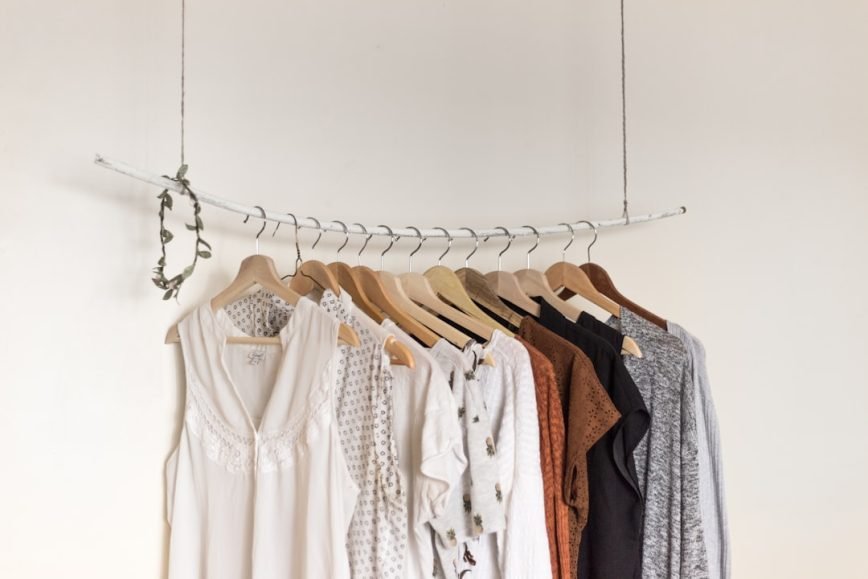
A capsule wardrobe is a small collection of clothes that easily complement one another, can be mixed and matched, and of course, represent your favourite pieces.
The capsule wardrobe goal is to minimise waste, save time when choosing what to wear, save money, and become more mindful and minimalist in our fashion choices.
The number of items in a capsule wardrobe varies from 37 to 50; at least, I found these figures during my research. However, I’m pretty sure I have more in my closet. The gurus of the capsule wardrobe suggest we aim for a few essential items and build from there. Some people also advise creating different capsule collections for each season, and it sounds like neat advice, especially if you live in a climate with four seasons.
The enormous benefits of having a capsule wardrobe include a smaller closet, fewer items, less waste, more time, and, last but not least, money saved.
Aiming at having fewer automatically means that our purchasing decisions will have to become more intentional. Once we learn to shop intentionally, we won’t let emotions sway our buying choices. We won’t allow marketers to tell us that we aren’t enough and need all the external stimuli to feel complete. With time and practice, our intentional shopping decisions will help us shift toward purchasing only what we need and use.
I don’t like shopping; I especially detest shopping centres, which are too bright, too crowded and too loud. However, if I have to buy something (I haven’t purchased any clothing for myself in over a year; I’m pretty psyched about it.) I need to know exactly which shops I’m going to if I’m not shopping online.
My favourite way to shop is to wait until the last days of a sale and buy the things I need, which are competitively priced by then. I hardly ever pay full price for clothing unless it’s something the children need. However, when I buy, I usually choose more expensive items that I know, from experience, will last longer and offer better value.
I strongly dislike throwaway fashion, which, in my opinion, is a waste of resources and creates vast pollution in the name of profit while intentionally depriving people of their hard-earned money.
A capsule wardrobe might be a fancy term, but behind the idea, you will find a common sense that emphasises a sustainable lifestyle (sustainable environment + financial freedom/independence) and comfort over fast fashion. For women who have been programmed to believe that spending should be our second nature, it also allows us to keep our money where it should be, in our investment portfolios.
As some of you might already know, I have a massive issue with women’s magazines and popular culture, mainly focusing on what is on the outside instead of concentrating on what’s important in life: comfort (however you may understand it), financial security (much more critical than my 20-year-old self wanted to believe), fulfilment (professional, private, etc.), following dreams and not working yourself to the ground to purchase the newest, most expensive handbag one can afford.
A capsule wardrobe gives you the tools to incorporate clothing honestly and truthfully, without dependency on trends and/or credit cards, of course. For me, a capsule wardrobe is fun and allows me to express myself creatively.
The consumption-based wardrobe (where you purchase new clothing or accessories every time you go out, every time something is on sale, or every time you feel sad and need a quick fix) runs counter to what a capsule wardrobe represents.
Shrinking your wardrobe into a capsule wardrobe doesn’t mean you have to get rid of all your clothing items above the magic number of 50. Just put the clothes you aren’t currently wearing in the box and keep them for later if you struggle to let them go or simply don’t want to see them go. You never know when you will change your mind and want to wear the clothes you thought you didn’t like (if I only had a penny for every clothing item I thought I didn’t like…).
A capsule wardrobe is a beautiful concept, creates less waste (charities often cannot sell the 2nd hand clothing, especially from high street fast fashion shops or supermarket chains) and saves us money in the process, money that could and should be nesting in our investment accounts while working for us.
Imagine spending $200 every quarter on your clothes, from shoes to underwear. Over the year, this amounts to $800.
If you put that money in your Index Funds portfolio instead, over ten years, on a very reasonable 7% yearly return, you will end up with $11,250 (in that calculation, $100 was the initial payment, and after that, $800 was contributed on a yearly basis). Over 30 years, this money would grow to $76,330, of which your financial contribution would be a mere $24,000, and the rest is interest earned, $52,230. Not too shabby now, right?
It’s something to think about next time you catch yourself buying yet another top you will use once, and only to cheer yourself up (I noticed that every time I’ve done that, my choices were seriously off).
If you don’t think a capsule wardrobe is for you, try it for ten days with ten different pieces. If you still don’t think it’s your kind of thing, don’t worry. There is no pressure to do anything you don’t feel comfortable doing or ready to do.
However, try to delay your clothing purchases for a week, and after that, do a simple calculation of how much time you would have to work to pay for the item. And if you still want to buy after applying the delayed-purchasing tactic and calculations, definitely go for it.
Just make sure you aren’t wasting your hard-earned money (as the person writing these words did for many years) on unnecessary things that don’t bring long-lasting happiness and instead push many people into the consumer debt trap.
PS. I’m #MadeByDyslexia – expect big thinking & small typos.
Leave a Reply