The way we relate and “consume” stories has changed drastically in the past 20 years. The rise of the Internet, mobile phones, and social media has reshaped how stories are told. Luckily for storytellers (including filmmakers), interest in and need for stories have not diminished.
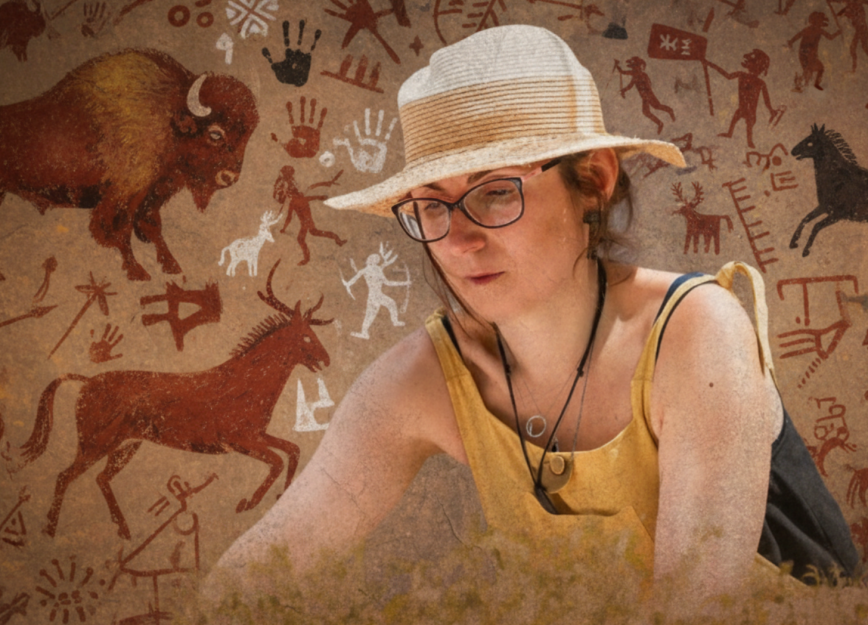
The art of storytelling goes way back to prehistoric times (before 3000 BCE). The earliest forms are associated with spoken traditions and cave paintings, expressed as symbols.
Brief History of Storytelling
Ancient Civilisations (3000 BCE – 500 CE) – introduced epic literature such as The Iliad and The Odyssey.
Medieval Period (500 – 1450/1500) – religious and moral tales were the most popular and accepted forms of stories.
Renaissance to Enlightenment (1500 – 1800) – novels, poetry, and magazines became widespread. Gutenberg’s invention of the printing press (1440–1450) made books far cheaper to produce and allowed a much wider audience to access them. Before the printing press, each book had to be copied by hand, one at a time. As books became more widely available, literacy increased as more people needed to learn to read.
In the 19th and early 20th centuries, genres such as detective stories, science fiction, and fantasy emerged. In the late 19th century, the invention of photography and cinema introduced the audience to visual storytelling.
In the 20th and 21st centuries, film and television have largely shifted storytelling from written formats to visually driven narratives.
The most recent digital revolution commercialised multimedia and transmedia as storytelling tools, and over the past 20 years, we have witnessed firsthand how storytelling has evolved.
My Personal Connection to Stories & Storytelling
As a child, my first meaningful experience with stories and storytelling came from radio plays. The actors’ voices tickled my imagination, allowing her to grow (my imagination and creativity is a SHE) and go places I never knew were possible.
When I was slightly older, I religiously watched old Hollywood classics.
The 30’s & 40’s films weren’t my intentional choice of entertainment. But the
Communist Party propaganda TV deemed those films as “harmless entertainment”. Luckily for me, those Hollywood classics paved the way for my love of moving images, shaping my likes, dislikes and teaching me the cinematic language, even though I didn’t know I was learning.
When I entered formal education, learning about ancient history and mythology helped my imagination thrive. For some reason, I felt deeply connected to those stories and the storytelling language, which used many metaphors. In fact, I spend countless hours imagining the Ancient Gods mixing with humans in Greece, Rome or Egypt. (I didn’t learn a lot about the Native People’s mythology, traditions and history. My school years before the transition to democracy were tainted by a communist curriculum, which had a very narrow understanding of history.) At some point, I even considered studying ancient history because it was so fascinating to me, and of course, Indiana Jones helped to captivate my imagination.
When Poland finally became a democratic country after 40 years of Soviet occupation, the censorship over entertainment slowly faded away.
Finally, for the first time in my life, I was able to access modern mainstream and indie films.
Indie films swept me off my feet right away. I felt as strongly connected to the indie filmmaking storytelling style as I did to the mythology. I absolutely loved “Reality Bites.” I watched “Crash” (the ’96 version) when I was clearly way too young to watch it, but hey, the video rental shop never checked my ID.
In the 90’s, films became my favourite way of engaging my imagination and creativity while slowly developing my visual storytelling muscle. Because the films weren’t readily available on demand, (which also help me “digest” the story in a more human way) I had to wait at least a week, if not longer, for each film. While waiting, I read a lot of fiction, adding to the growth of my storytelling muscle.
Modern Storytelling (from a point of view of a creative individual in 2026)
Nowadays, we are exposed to stories and storytelling almost instantly, without having to wait. The quality of stories has suffered because of the sheer volume of production.
Let’s take an average kids’ show on Netflix, or any other streaming platform for that matter. Once you watch one, it feels to me like you have seen them all. The animation style is similar across the shows, and the stories often use the same devices to tell them, such as mobile phones, social media, and apps, centring the plot around organising parties or events.
Is that accidental? I don’t think so.
Stories have shaped humans since prehistoric times, and those visual stories are also shaping our reality, while reprogramming our brains.
My intention isn’t to criticise the modern storytelling structure, or the variety of mediums used to tell stories (shorts, podcasts, audio plays, video essays, news, commentary, etc.), but to point out how influential the storytelling language is. If stories can influence adults, imagine how much power they hold over children.
Story Structure
The classic story structure has a beginning, a middle, and an end. A lot of the stories produced nowadays follow the same structure, as the three-act story structure is deeply embedded in human DNA.
The difference with the way modern storytelling has been used is in the context, aka what is behind the story. As audience members, we should pay closer attention to that context and scrutinise whether we are being manipulated.
Depending on the platform on which stories are published, they can be hijacked by algorithms that lean towards one political affiliation over another (it seems to me that in 2026, stories have been hijacked by politics), adding to the social divide. Certain narratives are framed as unquestionable facts or the only possible future, reshaping social norms to align with a particular agenda.
Nowadays, the storyteller is as important as the story itself. So, before you make your judgment about certain issues, make sure you know who the storyteller is and what their agenda is, especially if they want to sow seeds of doubt, division, and confusion.
Access to stories is easier than ever before. Still, we have to be very clear about which stories we really want to tell and hear, and how we want those stories to shape our lives, influence individual choices, and reshape the future of our planet and society. If we don’t like the current narrative, we need to start demanding a new one that isn’t driven only by the interests of the 0.01%.
How to Analyse the Story to Detect the Real Meaning of the Story:
– How is the story told, from whose perspective?
– How subjective is the story?
– What is the plot of the story (sequence of events, actions)?
– How are the product placements trying to depict reality?
– What are the emotional accents, and how are they placed within the story?
– Is the story helping the audience learn, understand something, become informed or rather divide?
– Is perhaps the story trying to set an agenda and shift the perception of reality by slowly re-shaping it in the image of someone’s agenda?
What’s Happening Over My YouTube Channel:
Girls Like Us – an audio guide through the Monument of London
Allotment Multidisciplinary Storytelling Art Project | Part 1 | Urban Balcony Garden
Allotment Multidisciplinary Storytelling Art Project | Part 2
2 PPL | Ecotopia Universe | Episode 11 | Patrick
Leave a Reply