

Mike Leigh is the head representative of British social realism, within the film industry, and his filmography is a showcase of British cinema in the world. He is often mentioned in the same breath as Ken Loach, with whom he shares an interest in social matters. Leigh is called a “tragi-comedian of everyday life” and a “film humanist” amongst modern directors.
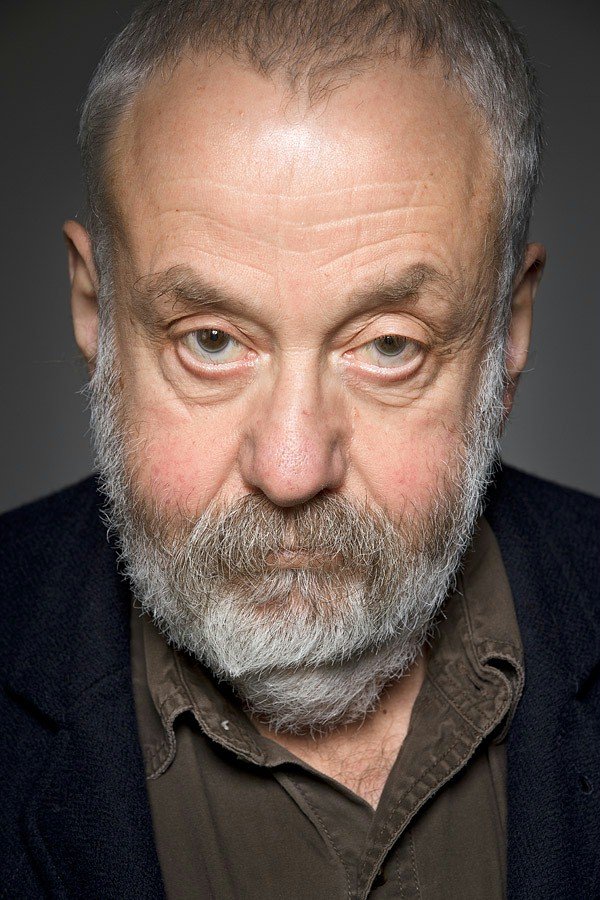 Born in Broughton, Salford on February 20th, 1943. His early childhood resembles the cinephile biography of Francois Truffaut. From his boyhood years, he was a keen movie fan and his critical attitude towards the movies watched in his early years filled him with the desire to show onscreen “life as it is”. This motto became a trademark of his creative activity.
His adventure with the cinema began with his experiences on the stage. Mike started his film education at the Royal Academy of Dramatic Art and then moved to the London Film School where he graduated. During his studies, he was writing and directing stage plays. He made his film debut in 1971 with the movie Bleak Moments but then, for a long time, abandoned film directing for a job with the BBC. In a time of crisis working for the BBC was an opportunity for many British directors of that generation to work at all and to develop.
Leigh returned to the cinema in 1988 with the movie High Hopes, where he criticised the policies of Margaret Thatcher through the confrontation of two married couples. One, aspiring to elevate their social status by accumulating wealth and the other one, socialistic, criticising such effort. In this small drama of tensions between people with different views, Leigh showed not only the problems of British society on the verge of the new economic era but also the psychological relations typical for every member of society. However, Mike Leigh is not a cinema sociologist. Social conditioning is only a background for interpersonal ties which could be placed within any other reality. Leigh is a Briton, and he locates the plots of his movies in the places he’s familiar with. As a humanist, Leigh leans over the human condition first of all. His interests are in particular behaviours, in a man with all his experiences, his emotions, his pain and joy and these are also the central themes of his movies. He specialises in discerning the psychological pictures with an analysis of the emotional games between people. This is precisely what distinguishes him from the much more committed Ken Loach.
Mike Leigh’s domain is the small psychological dramas set amid the working class. He draws portraits of the lost, suffering ordinary people showing their everyday concerns and emotions. Those are the characters of following movies Life is Sweet (1990), Naked (1993), Secrets and Lies (1996) and All or Nothing (2002). With passion typical somewhat of a documentary maker (and you have to remember that Leigh was a documentary maker once, working for BBC) he exposes weaknesses, pretence and hypocrisy, especially within the family. Pretty prosaic events, like a black woman showing up, looking for her mother in Secrets and Lies, or a son hitting the hospital in All or Nothing, break the blockades in understanding, cause people to throw away their masks and after many years of building walls of aversion and incomprehension are able to return and open their hearts to their dearest.
Mike Leigh avoids the moralism, does not judge them. As a director, he knows too well the world is not black and white and people are too complicated to put them into the “good” / “bad” drawers. That is why he tries to find a crack, a wicket he can get into everyone’s psyche. The most apparent view of this is in the drama Vera Drake (2004) taking up the subject of illegal abortions performed by an ordinary charlady. The director presents the title character with broad, humanistic, sympathy. Her activity, forbidden by the law, was an impulse of pity, an expression of the understanding of human pain. That’s why Vera doesn’t understand why she is punished for what she has done and, perhaps more importantly, why she elicits our compassion.
The authenticity of Mike Leigh’s movies are the results of this specific method of working with actors. He doesn’t shoot precisely to the script because the script never exists as a final piece, in fact, he starts shooting his films without any form of script. Actors are allowed, perhaps even obliged to have their input in the creation of characters and a dialogue list. Leigh loves improvisation on set and forbids actors to talk about the characters they play what gives that special effect of emotional credibility. Leigh’s movies are unadorned; he doesn’t stylize actors or the set itself. His low-budget productions are very naturalistic with space and time in them precisely determined.
The hopelessness, torpor and pessimism of Mike Leigh’s movies are never straightforward and final; they only exist in lesser or more significant saturation. Similarly to cracks inside the man, the turnarounds in reality around him, appear capable of changing his barren existence and open his eyes so he could feel the sense of being and joy of life again. Such praise of pure joy bears forth the newest Mike Leigh’s picture Happy-Go-Lucky (2008). Although originating from the anxieties and fears that the world today is covered in, this is simple praise of intelligent, mature optimism as a cure for the worries of the modern individual. Poppy’s attitude, her dedication to the joy of life and “seize the day” philosophy is to be regarded as a remedy to the fear and anxiety of today’s world. Once again Mike Leigh has proven, with this movie, how sensitive for “what in a modern man’s soul plays” he is. Because there is a 65-year-old man standing behind the smiling figure of Poppy, Poppy is his alter ego.
 Feature Movies
1971 Bleak Moments
1988 High Hopes
1990 Life is Sweet
1993 Naked
1996 Secrets and Lies
1997 Career Girls
1999 Topsy-Turvy
2002 All or Nothing
2003 Cinema 16
2004 Vera Drake
2008 Happy-Go-Lucky
2010 Another Year
Chosen Awards
1988 – FIPRESCI Award at Venice Film Festival for High Hopes
1993 – Award for Best Direction at Cannes International Film Festival for Naked
1996 – Golden d’Or at Cannes International Film Festival and five nominations to Academy Awards for Secrets and Lies
2004 – Golden Lion at Venice Film Festival for Vera Drake
Leave a Reply