

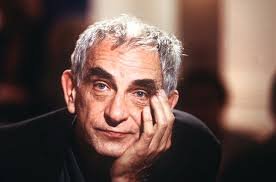
Krzysztof Kieślowski was, and still is regarded as, one of the most renown Polish directors in the world. He was born on June 27th, 1941 and died, a sudden death, on March 13th, 1996. He was a heavy smoker. Do you think he could have been still with us if he had been introduced to electronic cigarettes? His output is composed of numerous narrative and documentary films made for both theatrical release and TV as well as many scripts, most of which were screened but some left only as of the typescripts.

In 1987 his A Short Film About Killing gained him world recognition he quickly followed this up with the feature version of one of the parts of the TV series The Decalogue (1988-1989). The film began its triumphant procession at the Gdynia Polish Film Festival where it was awarded the Grand Prix. It then went on to conquer other European film festivals (i.e. the European Film Award, the FIPRESCI award and earning a nomination for the Golden d’Or at the Cannes International Film Festival). His next film which gained similar recognition was A Short Film About Love (1988).
However before Kieslowski gained recognition as the master of European cinema, he had gone through a long evolution of his style in his home country, Poland.
Having been a student of the National High School of Theatre Techniques in Warsaw between 1957 – 1962 he then went on to studying film directing at The Polish National Film, Television and Theater School, where he graduated in 1968. His early works were mainly as a documentary maker where he honed the skills that he had learned from his artistic mentors at the school; they were Kazimierz Karabasz and Jerzy Bossak. Both considered today as the classics of the Polish documentary and who created the Polish documentary school of the 1950s and the 1960’s. The early period of Kieslowski’s career brought fame and respect in Poland with his documentaries: From the City of Lodz (1969), Workers 71: Nothing About Us, Without Us (1972), From a Night Porter’s Point of View (1977) and Talking Heads (1980). These films were engaging politically and penetratingly diagnosed the reality of Poland under the communist regime, using the perspective of any given man in the street. The young generation of documentary filmmakers, with Kieslowski at the forefront, was showing the anxieties and ethical dilemmas of the people entangled in the totalitarian system, which was impossible to comprehend. It resulted in the social awareness growing into ”the moral concern” in Poland during the 1970s. This concern was reflected in films that were made during those times. Kieślowski, whose cinema narrative debut The Pedestrian Subway was made in 1973 and the first TV narrative feature Personnel was made in 1975, co-created together with others (like Andrzej Wajda, Agnieszka Holland, Krzysztof Zanussi) one of the most important trends in the history of Polish cinematography – ”cinema of moral concern”. This trend was an element of the so-called underground culture, existing on the margins of the official culture and as such was constantly facing the omnipresent state censorship. The ”Cinema of moral concern” was undermining the rhetoric of the regime. It was showing a torn society and its worries the nonsense of that reality and the tragedies of the people implicated in the politics, which cast a shadow on all areas of social life, was killing freedom and individuality and, most importantly, forcing individuals to make all too often tragic choices. These films, made in para-documentary aesthetics, whose main strengths were their script and naturalistic acting, predominated over the Polish narrative films in the years between 1976-81. Krzysztof Kieślowski appeared to be one of the leading directors of that time. Using his previous experiences from documentary making he realised in turn: The Calm (1976), The Scar (1976), Camera Buff (1979) and Blind Chance (1982). The films used different stories as excuses to show different cases of, in fact, the same protagonist (the favourite Kieslowski actor at that time was Jerzy Stuhr), searching for his place and truth in the world around, which seemed to be thoroughly irrational, corrupted and impossible to approve. The common denominator of the films is a moral choice the protagonist has to make to save his humanity in the inhumane world. From that point, it was only a small step to take to get to the subject that prevailed over the subsequent works of Kieslowski – a modern morality.
 The milestone on this road appeared to be a TV series The Decalogue (1988-89), for which the script had been written by Kieślowski together with Krzysztof Piesiewicz (their collaboration lasting for several years). Exploiting the Ten Commandments they created a series of medium-length films on the borderland between philosophy, metaphysics and eschatology, asking fundamental existential questions about the sense of existence and suffering. By creating The Decalogue, Kieślowski brought to an end his shooting of the ”politically engaged” films, and he began to concentrate solely on shooting entirely universalistic films, in which the director’s interest shifted towards the problems of the human condition.
The films that made Kieslowski world-famous were The Double Life of Veronique (1991) and the Three Colors trilogy (Blue 1993, White 1994, Red 1994), made in France and funded by the French. These films, entirely unanchored for any reality, are focused on the individuals, their emotions, experiences and psychological analysis of their behaviours. Aesthetically smooth, precisely structured and subtly staged, with Zbigniew Preisner’s music playing a considerable part, they gained a name of modern moralities. Interestingly, a change of the point of view and the aesthetics also caused a switch of director’s focus from a male protagonist, which had dominated in his earlier films during the 1970s and the 1980s, to a female one. Women are the dominant characters of The Double Life of Veronique and Three Colors. Polish film literature even distinguishes the two periods in Kieslowski’s works: male and female. As if the director, as the years went by, widened his perspective and let his anima (female psychological component) speak, as Carl Jung would say. During the female period, Irene Jacob became an international star. This French actress, previously little known outside France, was considered, and to this day still is, like Kieslowski’s favourite actress. Telling the films from the perspective of women, Kieślowski shifted their gravity towards emotions and ultimate verities such as love, friendship or an attitude in the face of old age and death. Those were the subjects that seemed to fascinate Kieslowski in his final years. The inexpressible, sensual and intuitive bond between ”astral twins” in The Double Life of Veronique, plot variations about the mottos, represented by the three colours of the French national flag, (Liberty, Equality, Fraternity) in the Three Colors trilogy prove that the world of values and undeniable moral standards prevailed over the real world. Leaving the realism and documenting the reality Kieślowski seemed to say that being at a certain age there’s not much sense worrying about small things. All that matters is loyalty to universal qualities.
Smoothening the composition of the director’s foreign language films aroused controversies in both, the audience and the critics. He was accused of excessive adornment, deft manipulation of the audience’s tastes and extreme alienation from reality, in which the whole sense is lost. Kieślowski gained many new enthusiasts and admirers, but he also got some unfavourable reviews from those who had been fascinated by his documentary works before.

The sudden death of Krzysztof Kieslowski in March 1996 found him at his peak. He left three finished scripts for another trilogy; Heaven, Hell and Purgatory, which he had co-written with Krzysztof Piesiewicz. In 2002 Tom Tykwer, well known for his fascination with Kieślowski’s works (which was shown in his debut Run Lola, Run, where he directly made use of the Blind Chance plot pattern), directed the first part, Heaven. The second part, Hell, was directed in 2005 by the Oscar winner, Danis Tanovic. The third part was made by the Pole, Stanisław Mucha, in 2007.
Chosen Narrative Films
1994 Three Colors: Red
1994 Three Colors: White
1993 Three Colors: Blue
1991 The Double Life of Veronique
1988-89 The Decalogue
1988 A Short Film About Love
1987 A Short Film About Killing
1984 No End
1981 Blind Chance
1979 Camera Buff
1976 The Scar
1976 The Calm
1975 Personnel
1973 The Pedestrian Subway
Chosen Documentary Films
1980 Talking Heads
1978 Seven Women of Different Ages
1977 Night Porter’s Point of View
1976 The Hospital
1974 First Love
1972 Workers 71: Nothing About Us Without Us
1972 The Refrain
1969 From the City of Lodz
1966 The Office
Chosen Awards
1980 Interfilm Award – Otto Dibelius Film Award at the Berlin International Film Festival for Amator (Amateur)
1988 FIPRESCI Prize and Jury Prize at the Cannes International Film Festival for A Short Film About Killing
1991 FIPRESCI Prize and Prize of the Ecumenical Jury at the Cannes International Film Festival for The Double Life of Veronique
1993 Golden Lion at the Venice Film Festival for Three Colors: Blue
1995 Independent Spirit Award for Best Foreign Film for Three Colors: Red
Leave a Reply